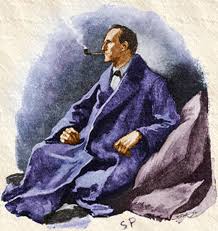
Sherlock Holmes

Sherlock Holmes

The Consulting Detective

RealisticSherlock HolmesArthur Conan DoyleNovel versionDetectiveFeat-rich
All rank#2
Archive score9.7
Statuspublished

Case Summary

Operational Reading

A deduction-dominant detective built on forensic observation, rapid cold reading, practical knowledge application, disguises, anticipatory trap-setting, and tightly sequenced case plans across Conan Doyle's prose canon.

Very strong novel-only import with broad direct feats across reasoning, perception, strategy, disguise, and planning. Some headline community claims still need conservative handling where the source package shifts from explicit case action into broad extrapolation, especially on extreme memory scaling and the longer-range Moran timing read.

Primary strengths: Deductive reasoning, Observation, Knowledge application, Disguise and deception, Short-to-mid-term planning

Feat entries: 103

Archive Note

This dossier was compiled primarily from Reddit-sourced material, so the current feat record may still be incomplete.

Because of that, a character can temporarily look weaker than they should in the leaderboard, battles, or radar profile if important feats have not been documented here yet.

The archive will keep improving over time as more feats, cleaner sourcing, and better scaling notes are added.

Radar profile

Intelligence Shape

Beta feature. This radar is AI-generated from the approved feat archive. Admins do not hand-score or manually tune these axis results.

Sherlock Holmes excels in cognitive analysis, strategy & planning, and reasoning, consistently demonstrating elite-level abilities supported by extensive feats of deduction and manipulation. While his deception and manipulation skills are strong, they represent comparatively weaker lanes compared to his exceptional cognitive and strategic capabilities.

FSIQ

9.7

EQ

9.3

Strategy & Planning

9.2

Reasoning

9.9

Manipulation

8.7

Deception

8.8

FSIQEQStrategy & PlanningReasoningManipulationDeception

Community signal

Votes nudge the live score instead of replacing the dossier score. Movement stays gradual so evidence remains primary.

Evidence Ledger

Categorized Feats

Jump directly into the needed category instead of scrolling every section manually.

Quick Access

Category

Planning

Planning archive records.

Planning Contingency

mediuminferencePlanning Contingency
Chooses Reichenbach because unrecovered bodies support the survival contingency

Holmes deliberately allows the confrontation to culminate at a place where bodies are unlikely to be found, because if only Moriarty's body turned up the organization might suspect Holmes lived, whereas no bodies better sustains the death illusion.

Source: The Final Problem analysis

Planning Preparation

highfeatPlanning Preparation
Prepares a replica ring so the trap can proceed without losing the real evidence

Because the investigators hold the original ring, Holmes has a duplicate made in advance so the ring-recovery trap can still operate without sacrificing the actual evidence.

Source: A Study in Scarlet - Our Advertisement Brings a Visitor

highfeatPlanning Preparation
Pre-arranges Mycroft's Lowther Arcade and Victoria transport role

Before meeting Watson, Holmes tells Mycroft exactly when to have a cab at Lowther Arcade and how to carry the transport chain forward to Victoria, integrating his brother into the escape route.

Source: The Final Problem analysis

highfeatPlanning Preparation
Prepares a wax dummy of himself before fully re-entering London

Before the Empty House trap springs, Holmes has a wax figure made in his own likeness so a convincing visible target can occupy the Baker Street window without risking Holmes himself.

Source: The Final Problem analysis / The Empty House section

Planning Accuracy

highfeatPlanning Accuracy
Secretly instructs the woman to stay in the room until ten in Naval Treaty

Holmes privately tells the woman to remain in the key room all day until 10:00 PM and then carry a candle upstairs, ensuring the thief cannot safely retrieve the treaty during the day and that the room state signals later timing.

Source: The Naval Treaty / Sherlock Holmes novel document

Planning Coverage

highfeatPlanning Coverage
Alerts Scotland Yard in advance so the fleeing brother is covered

Holmes informs Scotland Yard beforehand that the suspect will be running from the crime scene around the target time, adding a capture layer instead of relying only on his own presence.

Source: The Naval Treaty / Sherlock Holmes novel document

Short Term Planning

highfeatShort Term Planning
Builds a room-swap and lamp-signal plan to protect Helen from the Speckled Band

Holmes instructs Helen to complain of a headache, retire early, signal with a lamp once Roylott is settled, and then move silently to her old room so Holmes and Watson can occupy the danger room instead.

Source: The Adventure of the Speckled Band / Sherlock Holmes novel document

Category

Deception

Deception archive records.

Strategic Deception

highfeatStrategic Deception
Uses the retained address note and arcade sprint to shape Moriarty's read

Holmes tells Watson to give the driver a note and ensure it is kept, expecting Moriarty to inspect it later and read the movement as a straightforward flight plan while Watson sprints through the arcade to break the tail.

Source: The Final Problem analysis

highfeatStrategic Deception
Builds his farewell note and fearful front to sell the image of a doomed man

Holmes intentionally sounds frightened when describing Moriarty to Watson and leaves a sorrowful note before the confrontation, creating a later narrative in which he appears to have gone to certain death rather than planned survival.

Source: The Final Problem analysis

Fabrication

highfeatFabrication
Sends a fake Elsie letter in Dancing Men code to lure Abe Slaney

Holmes fabricates a message that appears to come from Elsie, using the cipher itself to make it credible, so that Abe comes to the house where Holmes and the police are ready to seize him.

Source: The Dancing Men / Sherlock Holmes novel document

Acting Skills

mediumfeatActing Skills
Poses as a dying man to coax a culprit into self-exposure

Holmes uses a dying-man disguise so convincingly that it enables a confession or revealing behavior from the target rather than simple suspicion.

Source: Sherlock Holmes novel document

highfeatActing Skills
Uses a clergyman disguise as the main access role in Bohemia

For the actual operation Holmes adopts a clergyman disguise, giving him a role that can plausibly approach respectably and later be admitted indoors once the street scuffle occurs.

Source: A Scandal in Bohemia / Sherlock Holmes novel document

highfeatActing Skills
Stages his injury so Irene will bring him inside

Holmes ensures he appears injured during the scuffle, making it natural for Irene's household to carry him indoors where the next stage of the plan becomes possible.

Source: A Scandal in Bohemia / Sherlock Holmes novel document

highfeatActing Skills
Boards the continental express disguised as an Italian priest

Holmes reaches the train independently in an Italian priest disguise so neither Watson nor Moriarty's side can easily identify him before departure.

Source: The Final Problem analysis

highfeatActing Skills
Uses an elderly-man disguise to reach Watson and London unseen

On returning to London Holmes adopts an elderly-man disguise, preventing Moran's side from recognizing him too early and allowing him to reveal himself to Watson on his own terms.

Source: The Final Problem analysis / The Empty House section

highstatementActing Skills
Sustains multiple disguises that fool even Watson

The supplied novel document lists Holmes convincingly posing as a seaman, poor man, clergyman, old priest, bookseller, plumber, dying man, old sporting man, and old woman, often fooling Watson despite their close familiarity.

Source: Sherlock Holmes novel document

Misdirection

highfeatMisdirection
Misleads the thief in Naval Treaty by claiming the party is returning to London

Holmes tells Phelps and, crucially, the suspect brother that the group will be taking a cab back to London, then quietly leaves the cab to run the real nighttime operation locally.

Source: The Naval Treaty / Sherlock Holmes novel document

highfeatMisdirection
Uses Mrs. Hudson's lights and curtains to sell the dummy silhouette

Holmes instructs Mrs. Hudson to light the room while keeping curtains arranged so Moran sees only the convincing silhouette, not the fraud itself.

Source: The Final Problem analysis / The Empty House section

Concealment

highfeatConcealment
Uses a poor cleaner disguise to surveil Irene's house

Before moving on the Bohemia plan, Holmes disguises himself as a poor cleaner near Irene's home so he can watch her comings and goings without attracting suspicion.

Source: A Scandal in Bohemia / Sherlock Holmes novel document

Deception Invisibility

mediumfeatDeception Invisibility
Maintains a concealed multi-country existence for years with only Mycroft in the loop

After Reichenbach Holmes travels through Asia and Europe while keeping his identity hidden and using Mycroft as the narrow channel for money and London intelligence.

Source: The Final Problem analysis / The Empty House section

Category

Manipulation

Manipulation archive records.

Indirect Manipulation

mediumfeatIndirect Manipulation
Persuades an inspector to secure a warrant on Holmes's timing

The dossier notes Holmes talks an inspector into obtaining a warrant near midnight, showing that he can quickly align formal police action with his case tempo.

Source: Sherlock Holmes novel document

Logical Manipulation

highfeatLogical Manipulation
Bluffs the goose salesman into revealing the source of the bird

Holmes pretends he has a wager over whether the goose is country-bred or town-bred, pushing the salesman to prove him wrong by disclosing where the goose came from.

Source: The Blue Carbuncle / Sherlock Holmes novel document

Psychological Manipulation

highfeatPsychological Manipulation
Triggers Irene's protective reflex with the fake fire

Holmes has Watson set off a false fire alarm knowing that, in sudden danger, Irene will instinctively go to secure what matters most, thereby revealing the location of the compromising photograph and letters.

Source: A Scandal in Bohemia / Sherlock Holmes novel document

mediuminferencePsychological Manipulation
Uses fear pressure to ensure Helen follows the Speckled Band plan exactly

The supplied document frames Holmes as intentionally heightening Helen's fear of the danger so she obeys his instructions without second-guessing or improvising.

Source: The Adventure of the Speckled Band / Sherlock Holmes novel document

Direct Manipulation

mediumfeatDirect Manipulation
Uses the threat of prison to break a man into confession-level panic

The supplied novel document describes Holmes intimidating a man so effectively with the prospect of prison that he drops to his hands and knees begging.

Source: Sherlock Holmes novel document

Category

Strategy

Strategy archive records.

Strategy Control

highfeatStrategy Control
Splits the luggage route from the real route at Canterbury

Holmes has the luggage continue toward Switzerland while he and Watson leave at Canterbury and travel cross-country by Newhaven, Luxembourg, and Basle, drawing Moriarty after the baggage instead of the men themselves.

Source: The Final Problem analysis

Strategy Timing

highfeatStrategy Timing
Returns alone at night to intercept the treaty thief at the predicted hour

After separating himself from Watson and Phelps, Holmes waits for nightfall and goes back around the hour he expects the brother to recover the hidden treaty, then confronts him in the act.

Source: The Naval Treaty / Sherlock Holmes novel document

Strategy Effectiveness

highfeatStrategy Effectiveness
Leaves Bohemia's house with the exact compartment location despite losing the full theft

Even though Irene later sees through the scheme and preempts the next day's retrieval, Holmes still successfully extracts the location of the hidden compartment during the operation itself.

Source: A Scandal in Bohemia / Sherlock Holmes novel document

Category

FSEQ

FSEQ archive records.

Cognitive Empathy

mediumfeatCognitive Empathy
Keeps Phelps mentally stable while solving the Naval Treaty case

Holmes explicitly tells Phelps he has a plan and manages the patient's emotions so that Phelps does not collapse completely while the recovery operation is still in motion.

Source: The Naval Treaty / Sherlock Holmes novel document

contestednarrativeCognitive Empathy
Stabilizes distressed clients instead of treating them as pure clue sources

Across examples like Phelps and other highly agitated visitors, Holmes does not merely observe distress but manages it enough to keep the case moving and the witness usable.

Source: Sherlock Holmes novel document

Category

Adaptability

Adaptability archive records.

Situational Adaptability

highfeatSituational Adaptability
Adapts to surviving Reichenbach by climbing down outside Watson's line of sight

Once Moriarty falls, Holmes immediately shifts from mutual-death framing to survival contingency, climbing down the side of the falls where Watson and any later investigators will not see him and where he will not leave obvious track evidence on the main path.

Source: The Final Problem analysis / The Empty House section

Category

Adversity Capacity

Adversity Capacity archive records.

Composure

highstatementComposure
Keeps composure while under continent-wide threat from Moriarty

The supplied novel document emphasizes that Holmes shows little visible nervousness despite being hunted by Moriarty, a foe with continental criminal reach and repeated murder attempts in play.

Source: Sherlock Holmes novel document / The Final Problem analysis

Focus Under Stress

highfeatFocus Under Stress
Evades Moran's sniper fire at the base of the falls

After the descent Holmes must deal with Moran's backup attempt to kill him from below, and he keeps his composure, runs through the forest, and escapes the sniper's line of fire.

Source: The Final Problem analysis / The Empty House section

Stress Tolerance

mediumfeatStress Tolerance
Endures a fear-amplifying drug long enough to lure the killer

The supplied novel document says Holmes intentionally inhales a drug that violently stimulates fear, suffers intense hallucinations for over ten minutes, and still recovers his composure afterward because enduring it is necessary to catch the culprit.

Source: Sherlock Holmes novel document

Mental Fortitude

highstatementMental Fortitude
Remains calm while Sebastian Moran is preparing to snipe him

The supplied novel document presents Holmes as completely composed, even laughing, while Colonel Moran, an elite sniper and planner, is trying to kill him and Watson.

Source: Sherlock Holmes novel document / The Empty House material

Impulse Control

mediumstatementImpulse Control
Shows almost no reaction when Watson shouts at him over drug use

The dossier notes that Holmes exhibits little physical or mental reaction when Watson angrily confronts him about taking drugs, implying unusually strong emotional compartmentalization.

Source: Sherlock Holmes novel document

Perseverance

mediumstatementPerseverance
Continues solving cases while severely ill and near death

The novel document frames Holmes as willing to keep working cases even in a state where he should be resting constantly to postpone death, prioritizing case resolution over his own condition.

Source: Sherlock Holmes novel document

Cognitive Discipline

mediumstatementCognitive Discipline
Does not let exceptional beauty distort his judgment

The supplied dossier specifically notes that Holmes does not allow attraction to highly beautiful women, including Irene Adler, to cloud his reasoning in case contexts.

Source: Sherlock Holmes novel document

Category

FSSQ

FSSQ archive records.

Social Skills

mediumstatementSocial Skills
Maintains useful acquaintances across many layers of society

Watson's observations and the supplied dossier both present Holmes as having many contacts from different circles, which repeatedly supports his information gathering and case access.

Source: A Study in Scarlet / Sherlock Holmes novel document

Category

FSIQ

FSIQ archive records.

WMI

mediumstatementWMI
Maintains a deliberately organized 'brain attic' for case-relevant information

Holmes explicitly describes the mind as an attic that should be furnished with useful material only, and the supplied novel dossier frames his retained case knowledge as being intentionally organized rather than merely passively remembered.

Source: A Study in Scarlet / Sherlock Holmes novel document

contestedstatementWMI
Retains a newspaper after a single read

The supplied document claims that after reading a newspaper once, Holmes remembers every word, using this as an extreme example of his working memory and retention.

Source: Sherlock Holmes novel document

VSI

highfeatVSI
Locates himself in London from cab movement alone

While traveling in a cab without visual access to the outside, Holmes states that he knows exactly where in London they are after tracking turns and travel flow mentally.

Source: Sherlock Holmes novel document

mediumstatementVSI
Estimates a thirty-foot window height at one glance

The supplied novel document says Holmes could tell from a glance that a window was thirty feet off the ground, indicating rapid visual measurement.

Source: Sherlock Holmes novel document

mediumstatementVSI
Mentally retains the stolen Naval Treaty building layout

Holmes is described as remembering and visualizing the entire building layout relevant to the Naval Treaty theft, including both stairways and the key room arrangement.

Source: Sherlock Holmes novel document

mediumstatementVSI
Visualizes the Priory School grounds and surroundings as one coherent map

The dossier states that Holmes held the layout of the Priory School, surrounding roads, grasslands, and nearby houses in his mind as an integrated visual field.

Source: Sherlock Holmes novel document

Category

Intelligence

Intelligence archive records.

Crystallized Intelligence

mediumstatementCrystallized Intelligence
Retains a broad case-relevant knowledge base across many fields

The supplied novel document credits Holmes with deep or practical working knowledge across chemistry, geology, law, tobacco, disguises, psychology, handwriting, military codes, geography, and other fields repeatedly applied in investigations.

Source: Sherlock Holmes novel document

Category

Knowledge

Knowledge archive records.

Knowledge Application

highfeatKnowledge Application
Identifies Trichinopoly cigar ash from the Lauriston floor

Holmes collects and inspects the dark layered ash at the scene and identifies it as Trichinopoly cigar ash, citing his own prior study of tobacco residues.

Source: A Study in Scarlet - What John Rance Had to Tell

Learning Ability

mediumstatementLearning Ability
Becomes expert in submarine mechanics after brief focused study

The supplied novel document states that Holmes became an expert on submarine mechanics in at least thirty minutes, presenting a rapid case-relevant learning feat.

Source: Sherlock Holmes novel document

Scientific Knowledge

highstatementScientific Knowledge
Identifies soil and district origin from mud at a glance

Watson's list of Holmes's abilities states that Holmes can inspect mud splashes on trousers and determine what part of London they come from by color and consistency.

Source: A Study in Scarlet - The Science of Deduction

highfeatScientific Knowledge
Creates a hemoglobin-specific reagent superior to older blood tests

When Holmes first appears in A Study in Scarlet, he is conducting laboratory work and demonstrates a reagent that precipitates only hemoglobin, which he presents as a clearer blood-identification method than prior approaches.

Source: A Study in Scarlet - Mr. Sherlock Holmes

mediumfeatScientific Knowledge
Infers poison administration by sniffing the dead man's lips

Watson later realizes Holmes's early lip examination was his way of detecting a poison clue, showing Holmes had already moved toward toxic explanation before it was verbally confirmed.

Source: A Study in Scarlet - Our Advertisement Brings a Visitor

Category

Perception

Perception archive records.

Pattern Recognition

mediumstatementPattern Recognition
Infers writer sex from spacing, vocabulary, and grammar at a glance

The novel document attributes to Holmes the ability to inspect word spacing, vocabulary, and general grammar and determine whether a writer is a man or a woman immediately.

Source: Sherlock Holmes novel document

Observation

highfeatObservation
Hears the ring claimant approaching before the doorbell sounds

While waiting for the ring visitor, Holmes tells Watson the caller will appear any minute and has already heard him before the bell rings, despite being on another floor.

Source: A Study in Scarlet - Our Advertisement Brings a Visitor

Behavioral Perception

mediumfeatBehavioral Perception
Infers Mortimer's asthma from his breathing pattern

Within seconds in the room, Holmes notices a breathing rhythm that he considers close to that of an asthmatic and adds the condition to Mortimer's profile.

Source: The Hound of the Baskervilles / Sherlock Holmes novel document

Category

Reasoning

Reasoning archive records.

Logical Reasoning

highfeatLogical Reasoning
Builds a detailed physical profile of Drebber's killer from the Lauriston scene

At Lauriston Gardens Holmes quickly concludes the killer is a man in his prime, over six feet tall, with small feet, blunt square-toed boots, a Trichinopoly cigar, a red face, and long fingernails, and that he arrived in a four-wheel cab with a horse wearing three old shoes and one new one.

Source: A Study in Scarlet - The Lauriston Gardens Mystery

highfeatLogical Reasoning
Breaks the Dancing Men cipher by using 'Elsie' and English letter frequency

Knowing the target name is Elsie and that E is common in English, Holmes spots repeated symbols in matching positions, anchors the cipher from there, and expands outward to infer words and decode the full message system.

Source: The Dancing Men / Sherlock Holmes novel document

Deductive Reasoning

highfeatDeductive Reasoning
Deduces Watson's Afghanistan service from appearance in under a second

Holmes glances at Watson and concludes he is a doctor, that he has military bearing, tropical exposure, illness, and a wounded arm, then compresses those clues into the conclusion that Watson is an army doctor returned from Afghanistan.

Source: A Study in Scarlet - The Science of Deduction

highfeatDeductive Reasoning
Infers candle use rather than gas lighting from grease stains on the hat

Holmes notices multiple candle stains on the hat and concludes that the owner relies on candle lighting rather than gas in his residence.

Source: The Blue Carbuncle / Sherlock Holmes novel document

highfeatDeductive Reasoning
Identifies Dr. Mortimer from cane markings and hospital date

Holmes reads the 'Charing Cross Hospital' inscription, the 1884 date, and contextual career timing to conclude whose cane it is and connect it to Mortimer's medical background.

Source: The Hound of the Baskervilles / Sherlock Holmes novel document

highfeatDeductive Reasoning
Infers Helen's dog-cart ride from fresh mud on her left sleeve

Holmes notices fresh mud on the underside of Helen's left arm and compares the splash pattern to transport types, concluding that she arrived in a dog-cart seated on the driver's left.

Source: The Adventure of the Speckled Band / Sherlock Holmes novel document

highfeatDeductive Reasoning
Reconstructs Constable Rance's exact movements from scene tracks

Before Rance explains himself, Holmes tells him that he stopped at the gate, returned looking for a colleague, entered the room, knelt by the corpse, and tried the kitchen door, all from reading the tracks left behind.

Source: A Study in Scarlet - What John Rance Had to Tell

highfeatDeductive Reasoning
Infers an anonymous note is written by a man on expensive paper

Before Bohemia's client is revealed, Holmes inspects the note and reads both the quality of the paper and male authorship from material and writing characteristics.

Source: A Scandal in Bohemia / Sherlock Holmes novel document

Connecting The Dots

highfeatConnecting The Dots
Tracks the Five Orange Pips murders to the Ku Klux Klan and the Lone Star

Holmes links the warning pattern, the family's American plantation ties, the timing gap between letter and death, the probable sailing route, and ship records from Pondicherry and Dundee to identify the Ku Klux Klan and isolate the vessel Lone Star.

Source: The Five Orange Pips / Sherlock Holmes novel document

Probabilistic Reasoning

highfeatProbabilistic Reasoning
Infers Henry Baker from the initials inside the hat

Holmes combines the hat's internal initials with common naming patterns and identifies the owner as likely Henry Baker before confirming the lead through later contact.

Source: The Blue Carbuncle / Sherlock Holmes novel document

Abductive Reasoning

highfeatAbductive Reasoning
Identifies the drunken red-faced man in the scarf as the real killer

Holmes uses the clue chain around the ring, the eyewitness account, and the already-built physical profile to conclude that the apparently drunken red-faced man seen near the scene was the murderer himself.

Source: A Study in Scarlet - What John Rance Had to Tell

highfeatAbductive Reasoning
Uses the pill pair to confirm one harmless tablet and one poison tablet

When Lestrade mentions the two pills, Holmes immediately treats them as the key to the case, tests them separately on a dying dog, and correctly concludes that only one is poisoned.

Source: A Study in Scarlet - Lestrade's report aftermath

highfeatAbductive Reasoning
Infers the Naval Treaty is hidden in Phelps's own room

Holmes concludes before retrieving it that the stolen treaty is still in the room where Phelps spends most of the day, making the solution a matter of timing and exposure rather than a broader city search.

Source: The Naval Treaty / Sherlock Holmes novel document

mediumfeatAbductive Reasoning
Infers that the wife's brother is the Naval Treaty thief

Before he has hard proof, Holmes identifies the wife's brother as the likely thief and structures the later operation around that conclusion.

Source: The Naval Treaty / Sherlock Holmes novel document

highfeatAbductive Reasoning
Infers that the watcher outside Baker Street works for someone who knows Holmes is alive

On returning in The Empty House, Holmes spots a man watching Baker Street and reasons that there is no innocent motive for the surveillance, so the watcher must be tied to a hostile actor already aware of Holmes's survival.

Source: The Final Problem analysis / The Empty House section

Causal Reasoning

highfeatCausal Reasoning
Infers decline in wealth from the hat's old quality materials

Holmes notes that the hat was once expensive and high quality, yet has not been replaced for years, leading him to conclude that the owner's finances have declined since purchase.

Source: The Blue Carbuncle / Sherlock Holmes novel document

highfeatCausal Reasoning
Infers a dog's repeated carrying habit from claw marks on Mortimer's cane

Holmes notices long-standing claw marks in the middle of the stick and concludes that a dog habitually carries it there for its owner.

Source: The Hound of the Baskervilles / Sherlock Holmes novel document

highfeatCausal Reasoning
Infers the victim and killer entered on friendly terms before quarreling

From the footprint spacing and movement pattern in the Lauriston room, Holmes concludes that victim and killer walked in amicably, then the blunt-toed man began pacing and working himself into rage before the killing.

Source: A Study in Scarlet - What John Rance Had to Tell

Abstract Reasoning

mediumfeatAbstract Reasoning
Reconstructs the pre-fire structure of Norwood house

After much of the Norwood house is burned, Holmes is credited with visually reconstructing what the interior and exterior looked like before the damage from remaining dimensions and visible structure.

Source: Sherlock Holmes novel document

Category

Psychology

Psychology archive records.

Psychological Profiling

mediuminferencePsychological Profiling
Profiles Moriarty's narcissism and freedom-obsession from one candid conversation

After Moriarty visits Baker Street, Holmes uses his wording, confidence, and willingness to speak in person to conclude that Moriarty is a superiority-driven, freedom-obsessed narcissist who sees Holmes as a personal obstacle rather than merely a police risk.

Source: The Final Problem analysis

Mental State Analysis

mediumfeatMental State Analysis
Reads Helen Stoner's fear and distrust toward her stepfather

Holmes identifies both fear and distrust in Helen's presentation and treats those psychological cues as part of the case structure before the room inspection pays them off.

Source: The Adventure of the Speckled Band / Sherlock Holmes novel document

mediumfeatMental State Analysis
Understands the shame and family stakes behind Phelps's collapse

Holmes recognizes that Phelps is not simply ill but psychologically crushed by the treaty loss because of its effect on his honor, his career, and how his family may see him.

Source: The Naval Treaty / Sherlock Holmes novel document

Psychological Analysis

mediumstatementPsychological Analysis
Builds deduction method around fleeting expressions and involuntary muscle movement

Holmes's article 'The Book of Life' argues that fleeting facial expressions and involuntary muscle movement can reveal hidden thought, implying an explicit micro-observation framework behind his people-reading.

Source: A Study in Scarlet - The Book of Life discussion / Sherlock Holmes novel document

Motive Analysis

mediuminferenceMotive Analysis
Infers divorce and emotional desperation from the state of the hat and the goose

Holmes reasons that the unbrushed hat suggests a lack of attentive wife, and when combined with the owner's goose purchase as a likely peace offering, he reconstructs a recent marital collapse and sad effort at reconciliation.

Source: The Blue Carbuncle / Sherlock Holmes novel document

Personality Analysis

highfeatPersonality Analysis
Infers former foresight but present deterioration from the hat's elastic securer

The custom hat securer suggests a man who once took precautions and cared for details, while the broken elastic left unrepaired implies slipping discipline and self-care.

Source: The Blue Carbuncle / Sherlock Holmes novel document

mediumfeatPersonality Analysis
Infers Mortimer is a bachelor from his accepted untidiness

Holmes reads Mortimer's deliberately untidy presentation and reasons that such unattended dress would be less likely if he had a wife managing or correcting it.

Source: The Hound of the Baskervilles / Sherlock Holmes novel document

highfeatPersonality Analysis
Sees through Irene Adler's public front and reads her romance with Godfrey Norton

By observing their behavior together, Holmes concludes that Irene and her lawyer are actually in love rather than merely maintaining a normal professional relationship.

Source: A Scandal in Bohemia / Sherlock Holmes novel document

Category

STP

STP archive records.

Cold Reading

highfeatCold Reading
Identifies a messenger as a retired Royal Marines sergeant from across the street

Holmes reads the man's military bearing, side-whiskers, and general carriage, concluding before the exchange that the visitor is a retired sergeant of the Royal Marines, which the man then confirms.

Source: A Study in Scarlet - The Science of Deduction

mediumstatementCold Reading
Profiles John Hector McFarlane as bachelor, solicitor, freemason, and asthmatic at a glance

The dossier credits Holmes with instantly reading multiple social and occupational details from McFarlane, including his profession, fraternal link, relationship status, and breathing-related condition.

Source: Sherlock Holmes novel document

Behavioral Reading

mediumfeatBehavioral Reading
Reads above-average intelligence from Henry Baker's large hat size

In the hat analysis, Holmes infers that the owner is intellectually capable because the hat size implies a large head, which he treats as one clue among several rather than a complete conclusion by itself.

Source: The Blue Carbuncle / Sherlock Holmes novel document

highfeatBehavioral Reading
Infers a woman's bicycle use and musical profession from shoes and fingers

Holmes notices side-wear from pedal friction on shoes and spatulate fingertips, using those clues to conclude that the woman regularly cycles and is a professional musician.

Source: Sherlock Holmes novel document

Seeing Through Deception

highfeatSeeing Through Deception
Recognizes 'RACHE' as a fake German lead meaning revenge rather than Rachel

Holmes rejects the police assumption that the killer was writing 'Rachel' and instead treats the word as the German 'Rache' for revenge, while also noting that the letter style shows the writer is imitating German rather than actually being German.

Source: A Study in Scarlet - The Lauriston Gardens Mystery

Seeing Through Strategy

highfeatSeeing Through Strategy
Recognizes the sick Englishwoman message at Meiringen as Moriarty's isolation ploy

When Watson receives the urgent message about an ill Englishwoman, Holmes immediately reads it as Moriarty's move to separate him from Watson before the confrontation.

Source: The Final Problem analysis

Category

Outsmarting

Outsmarting archive records.

Strategic Outsmarting

highfeatStrategic Outsmarting
Deduces the Red-Headed League tunnel scheme from Clay's behavior and shop geography

Holmes notes Vincent/Clay's half-wage job request, acid mark, mud on trousers, and the shop's usefulness as a digging point, then concludes the league is a distraction while a tunnel is being dug toward the nearby bank and that John Clay is involved.

Source: The Red-Headed League / Sherlock Holmes novel document

Deceptive Outsmarting

highfeatDeceptive Outsmarting
Uses the fake Elsie message to convert cipher knowledge into a mansion arrest trap

After solving the code, Holmes does not just interpret it; he weaponizes it by using a forged message to bring Abe to a controlled location where police are already concealed.

Source: The Dancing Men / Sherlock Holmes novel document

Tactical Outsmarting

highfeatTactical Outsmarting
Turns the empty house into a counter-sniper ambush and captures Moran

Holmes and Watson hide in the empty house opposite Baker Street, wait for Moran to fire at the decoy, and then rush and capture him once the shot commits him.

Source: The Final Problem analysis / The Empty House section

Category

Foresight

Foresight archive records.

Long Term Anticipation

mediuminferenceLong Term Anticipation
Uses the Moriarty profile to forecast his week-long pursuit behavior

The Final Problem analysis presents Holmes as using that fresh psychological model to anticipate Moriarty's choices across transport pursuit, isolation tactics, and the desire for a personal superiority-confirming confrontation.

Source: The Final Problem analysis

contestedinferenceLong Term Anticipation
Anticipates Moran's likely return-to-murder window after years in hiding

The supplied analysis argues that Holmes did not return by coincidence, but read Moran's psychology well enough to judge roughly when loss, ego, and criminal drift would push him into murder again and create the opening for Holmes's reappearance.

Source: The Final Problem analysis / The Empty House section

Trap Evasion

highfeatTrap Evasion
Instructs Watson to avoid the first two hansoms because they may be controlled

Holmes tells Watson not to take the first or second available hansom, anticipating that Moriarty's side would secure those most obvious options as an interception layer.

Source: The Final Problem analysis

Opponent Move Forecasting

highfeatOpponent Move Forecasting
Predicts a scuffle will break out as Irene leaves her carriage

Holmes anticipates that a fight or commotion will happen as Irene exits, allowing Watson to enter the house during the confusion and Holmes to play the injured rescuer.

Source: A Scandal in Bohemia / Sherlock Holmes novel document

highfeatOpponent Move Forecasting
Predicts Moriarty will use a special train to catch them during the boat delay

Holmes calculates that Moriarty can catch their train only by engaging a special and taking advantage of the quarter-hour delay before the boat, so he gets off earlier at Canterbury instead.

Source: The Final Problem analysis

highfeatOpponent Move Forecasting
Predicts Watson will be isolated at Meiringen before the Reichenbach clash

Holmes expects Moriarty to remove Watson rather than accept a clean two-on-one imbalance, so when the fake medical summons arrives it fits the pattern he had already projected.

Source: The Final Problem analysis

Short Term Anticipation

highfeatShort Term Anticipation
Predicts the wedding will need an extra ring witness or helper

At the church Holmes places himself where he can be selected, correctly foreseeing that the rushed private wedding will need another participant to help complete the ceremony.

Source: A Scandal in Bohemia / Sherlock Holmes novel document

Logical Prediction

highfeatLogical Prediction
Infers Moran will attempt the shot from the empty house opposite Baker Street

Holmes reasons that the empty house down the road offers the correct height and concealment for an assassin watching Baker Street, so he predicts Moran's later firing position before the ambush is sprung.

Source: The Final Problem analysis / The Empty House section

highfeatLogical Prediction
Predicts Irene and Norton will marry secretly before six

After profiling the pair, Holmes reasons they will need to marry unofficially and quickly, follows them, and catches the timing closely enough to be present at the church at 5:50.

Source: A Scandal in Bohemia / Sherlock Holmes novel document

highfeatLogical Prediction
Predicts Irene will admit an injured man because of her underlying kindness

Holmes's plan depends on his reading that Irene is too kind to leave an apparently injured clergyman in the street, and that prediction proves correct during the operation.

Source: A Scandal in Bohemia / Sherlock Holmes novel document

Category

Tactics

Tactics archive records.

Tactical Deception

mediumfeatTactical Deception
Recreates a murder method publicly to draw out a guilt-stricken culprit

The novel document credits Holmes with reproducing the same chemicals, quantities, and timing as the original murder method so that the real culprit, seeing someone understands it, will reveal himself out of guilt and alarm.

Source: Sherlock Holmes novel document

Tactical Counterplay

highfeatTactical Counterplay
Waits in darkness and reverses the snake back at Roylott with his whip

Holmes and Watson hold position in the dark until the snake comes through the ventilator, after which Holmes lashes it back through the opening, causing Roylott's own murder method to kill him instead of Helen.

Source: The Adventure of the Speckled Band / Sherlock Holmes novel document

Tactical Trap Setting

highfeatTactical Trap Setting
Uses the ring advertisement to bait the Lauriston killer into contact

Holmes publishes a notice that the lost ring has been found, correctly reasoning that the killer cannot comfortably abandon it and will risk trying to recover it.

Source: A Study in Scarlet - Our Advertisement Brings a Visitor